Background of Bass Phillip
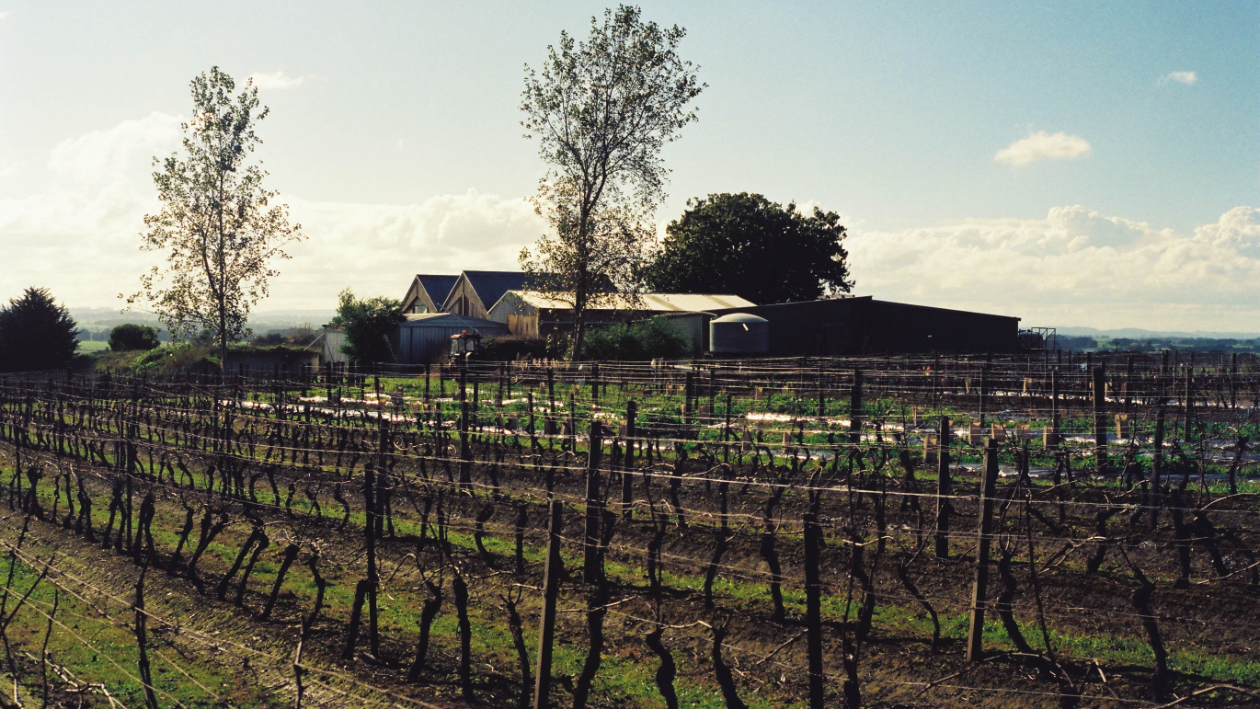
Bass Phillip is named after George Bass and Arthur Phillip – men of great pioneering spirit, foresight and leadership during the nineteenth century. The Bass Phillip vineyards were first established, many years later, in the southeastern corner of Australia in 1979, specialising in high-quality pinot noir and chardonnay wines.
Winemaking at Bass Phillip is uncompromising and driven by the respect for nature. The vineyards have been organic since 1993 and biodynamic since 2002. All wine production processes at Bass Phillip are guided by the cosmic rhythms that impart energy and vibrancy into the wines.
Made in a simple and traditional manner, with low-cropped vineyards, no irrigation and minimal intervention in the winery, the wines of Bass Phillip display flavours which are characteristic of the region and their individual vineyards. Deep mineral-rich soils, natural high humidity, and cooler temperatures in South Gippsland is also part of the magic that delivers the length, complexity, flavors, balanced acidity, and natural minerality to Bass Phillip wines. Combining undivided attention to detail in the vineyards and winery, and an insatiable passion for quality wine experiences, Bass Phillip produces extraordinary wines one vintage after another.
The most recent vintages of Bass Phillip pinot noir are the best we have produced. We put this down to older vines, more experience in winemaking, and continued sustainable practices in both the vineyards and winery.
What makes Bass Phillip unique?
Wines at Bass Phillip are handcrafted with strict scientific analysis and monitored with rigorous quality control. However the story doesn’t end there, the real essence of Bass Phillip’s wine production is to allow the forces of nature to maintain control. Minimal human intervention is practiced wherever possible – no irrigation/pesticides/fertilizers, minimal pumping/ filtration, natural yeast, no fining agents.
As a perfectionist, we crop our fruit at incredibly low levels to achieve the objectives in flavour development. We believe strongly in a gentle hand. Racking is kept to a minimum and no pumps are used in the winery. “The difference between good and great Pinot Noir is texture. We try to minimise the bruising effects that pumping can have on this texture.” Ultimately our priority is to produce a wine that is completely natural and which expresses vineyard site. This sounds simple, but such a high standard does require a relentless pursuit of perfection – and a degree of madness.
The Biodynamic practice at Bass Phillip is planned according to the lunar cycles. Adopting these practices means that each vintage of Bass Phillip wines exhibits the characteristics of “mother nature’s” temperament, expressing the harmony of earth, moon and sun. Displaying the natural influences of nature’s power and elegance.
South Gippsland's "Terroir"
South Gippsland is not only renowned for dairy and beef, but also the giant Gippsland earthworm, which play an active role in the fertilization and airing of the deep mineral-rich soil of the vineyards. The region is blessed with approx.1,000 millimetres of rainfall per annum and a deep, silty loam soil filled with volcanic minerals. High temperatures (mid 30 Celsius degrees) in the summer months are balanced by humidity and late afternoon, cool air from Bass Straight. All these factors contribute to the intense flavours, aromatics and exceptional length in the finish, which are trademarks of Bass Phillip’s vibrant, yet graceful wines.
Dense Vines & Low Yields
This is basically a story of “quality overrides quantity”
High density planting is one of the approaches taken by Bass Phillip to prove that Australia can produce a jaw-dropping pinot that is comparable with the best from the Pinot Monarch – Burgundy, France.
Bass Phillip achieves a cropping level of 1.0 -1.3 tonnes per acre (compared to from 2 to 4 tons per acre average in Australia). We believe this contributes to intensity and length of flavour which is not always prominent in Aussie pinots. Many question the economics of this low level of yield, but when the wine-making is driven by an obsession for perfection and instinctive flair, production costs become secondary.
Although a single vine at Bass Phillip barely makes half a bottle of wine, the highly perfumed nose, robust flavors, exquisite textures, profound complexity and minerality contained in each bottle provide a justification for this practice.
Long Cellaring Potential
Bass Phillip pinot noirs have always managed to improve in the cellar, sometimes for more than twenty years (1985, ’88, & ’89 are currently magnificent). Bass Phillip believes this ability to cellar and mature superbly over extended periods comes from the strong mineral component of the soil and climatic conditions that provide good natural acidity. When young, the wines are not excessive or unbalanced in any way, but develop a blossoming strength of flavour at the back of the palate, as the wines age. This is one of the most attractive features of the Premium and Reserve Bass Phillip wines.
A New Phase at Bass Phillip
The year 2020 marked a historic milestone for Bass Phillip with the arrival of Jean-Marie Fourrier (of Domaine Fourrier) and his associates. This partnership represented a significant phase of growth, where Jean-Marie was invited to take a primary role in the stewardship of the vineyards and the refinement of the wine production process.
The collaboration was born from a shared philosophy between Jean-Marie and previous winemaker Phillip Jones. Both men found deep inspiration in the methods of the great Henri Jayer of Vosne-Romanée. After first meeting in South Gippsland over a decade prior, they joined forces to ensure the continued development of fine wines defined by texture, complexity, and a profound sense of place.
This pivotal era allowed Bass Phillip to benefit from the combined experience and world-class skill sets of two exceptional Pinot Noir specialists. Today, the estate continues to grow internationally, building upon the legacy of excellence and the elevated viticultural standards established during this storied transition.
The Fourrier Influence: A Legacy of Precision
The evolution of our winemaking philosophy owes a significant debt to the involvement of Jean-Marie Fourrier. Following the foundational era of previous winemaker Phillip Jones, Jean-Marie played a pivotal role in the transition of our viticultural practices. Bringing the same rigor that garnered him international acclaim at his own 10-hectare estate in Gevrey-Chambertin, Jean-Marie’s presence ensured that the transition was marked by an uncompromising commitment to terroir and "The Philosophy of Doing Nothing."
Jean-Marie’s perspective was shaped not only by his family’s heritage in Burgundy but by his time working alongside the legendary Henri Jayer in Vosne-Romanée. It was during this transition period that Jayer’s fundamental practices became deeply embedded in our cellar DNA: the belief that great wine begins with fastidious, natural vineyard management and ends with a "strict and extremely natural" approach to vinification.
During his time guiding the winemaking transition, Jean-Marie championed the belief that old vines and extreme vigilance are the only paths to true wines of terroir. He often remarked, "Until a vineyard develops its root system, it doesn’t develop flavor." This period saw a rigorous shift toward natural balance, restricting yields through winter pruning rather than green harvesting and eliminating chemical fertilizers in favor of equilibrium.
Under this guidance, the cellar adopted a fastidious approach to grape selection, ensuring only perfect fruit entered the tanks to facilitate a successful élevege on the fine lees without racking. To capture the unique expression of each parcel, the vinification process moved toward 100% destemming and gentle pre-maceration to draw out aromatic phenols and color naturally.
The hallmark of the Fourrier-led transition was the preservation of fruit purity. By keeping new oak usage below 20%—even for top-tier wines—the focus remained on the limestone-driven personality of the vineyard rather than the influence of the barrel. Jean-Marie’s famous catchphrase, "Oak is for slow breathing of the wine and not for taste," remains a guiding principle of our style today.
This era solidified a commitment to bottling without fining or filtration, allowing dissolved carbon dioxide to remain as a natural protectant in deference to "modern market requirements." The results of this transition remain inimitable: wines of superb poise, enchanting elegance, and rich complexity. Today, we continue to honor the standards set during this important chapter, bearing witness to a legacy of finesse and aromatic balance that ranks among the finest in the world.
Background of Founder
Phillip Jones commenced his wine career in 1979 at the age of 32, having spent an early career in telecommunications and IT research. He was captured by the great wines of Burgundy (eg. Charles Rousseau and Henri Jayer) in the early eighties, which set him on the path of finding an appropriate region and appropriately organic techniques to develop pinot noir wines with depth and fine texture. He laboured for years without results and finally entered the Australian market in 1991. Since then, his Bass Phillip pinots have often achieved the highest ratings in the land, including the nomination of his 2010 Reserve pinot noir as the Australian Wine of the Year. The Bass Phillip vineyards have grown to 14 hectares over the past 25 years, much like a small Burgundy Domaine.